

If you’ve ever renewed your car or bike insurance, you know the drill: Own-Damage (OD) cover is optional, while Third-Party (TP) cover is strictly mandatory by law. Because every vehicle on Indian roads legally requires third-party coverage, you would naturally expect it to be the fastest-growing—or at least the steadiest—segment in the motor insurance industry.
Yet, recent numbers tell a surprisingly different story.
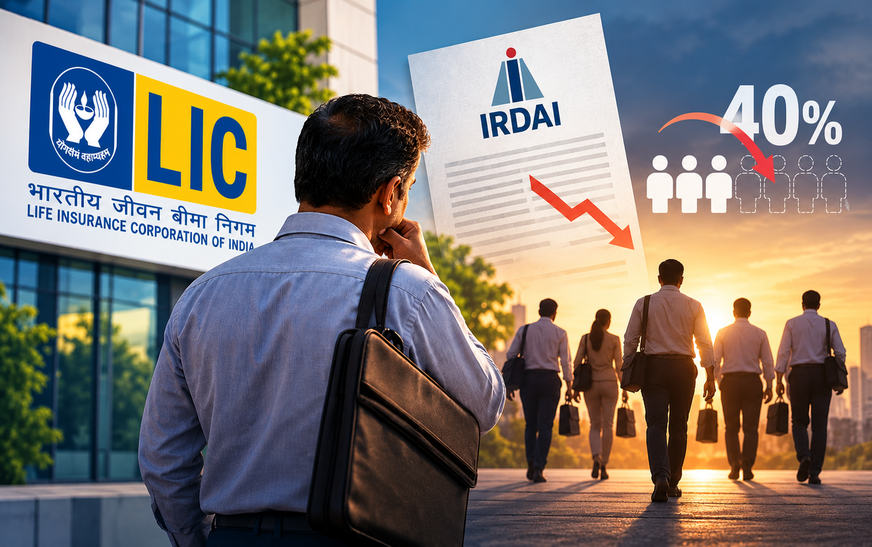
According to a new research report by Kotak Institutional Equities, growth in motor third-party insurance premiums slowed to a sluggish 9% year-on-year in September 2026. Meanwhile, the optional Own-Damage segment surged ahead by 17%, pulling overall motor insurance growth to 13%.
Why is a legally mandatory insurance product lagging so far behind? The answer may lie in a landmark courtroom decision—and the quiet recalibration happening inside insurance boardrooms.
The Courtroom Catalyst: Valuing the Unpaid Work of Homemakers
In June 2026, the Supreme Court of India delivered a progressive and deeply humane judgment: when calculating motor accident compensation, courts and insurers must recognise the tangible economic value of the unpaid domestic work performed by homemakers.
Socially and legally, it was a watershed moment that gave long-overdue financial recognition to the invisible labour that keeps households running.
From an actuarial and underwriting perspective, however, it fundamentally changed the math for motor third-party insurers. Because third-party policies cover legal liabilities for injury or death caused to others on the road—with no predefined upper cap on court-awarded compensation—higher baseline payouts for homemakers mean significantly larger claim liabilities for insurance companies.
A Quiet Retreat by Private Insurers
Faced with the prospect of steeper court-mandated payouts and tightly regulated third-party premium rates, many private insurers appear to be taking their foot off the gas in the TP segment.
Kotak’s report, titled “Insurance: Stable trends; decline in fire moderates,” points out that most private players intentionally slowed down their focus on third-party business in September.
Here is how the numbers stacked up across the board:
| Insurance Segment | YoY Premium Growth (Sept 2026) | Key Trend |
| Motor Third-Party (TP) | 9% | Sluggish; insurers cautious over rising claim liabilities |
| Motor Own-Damage (OD) | 17% | Strong growth; insurers have pricing flexibility |
| Overall Motor Insurance | 13% | Driven primarily by the Own-Damage segment |
| Broader Non-Life (ex-Crop) | 14% | Healthy expansion across non-motor lines |
The Outlier: SBI General Steps on the Pedal
While almost the entire private insurance pack hit the brakes on third-party policies, one major player moved in the exact opposite direction: SBI General Insurance.
After recording 11% to 20% growth in the preceding two months, SBI General’s motor third-party premiums jumped an impressive 32% year-on-year in September 2026, standing out as a lone bright spot in an otherwise cautious market.
The Bigger Picture: A Tightrope Walk for the Industry
This divergence highlights a classic tension at the heart of Indian motor insurance. On one hand, third-party insurance acts as a vital social safety net, ensuring accident victims and their families aren’t left financially devastated. The Supreme Court’s recognition of homemakers strengthens that safety net in a meaningful way.
On the other hand, insurers operate on risk and margin. When compensation liabilities rise unpredictably while third-party tariff hikes remain tightly controlled, underwriting motor TP policies becomes a tough financial proposition.
Final Thoughts
While Kotak notes that it is still too early to measure the exact long-term strategic shift across the industry, September’s numbers send a clear signal. Insurers are watching legal and regulatory developments closely—and adjusting their portfolios in real time.
Until motor third-party pricing catches up with evolving compensation realities (or premium deregulation becomes a reality), expect insurers to stay selective, leaning heavily on Own-Damage and other non-life segments to drive their growth.