
India’s motor insurance proposals include four-year single-premium cover for cars, six-year cover for two-wheelers and higher renewal premiums for motorists with traffic violations, according to reports published on 25–26 November 2026.
The Ministry of Road Transport and Highways (MoRTH) is examining the measures as part of efforts to increase insurance coverage and improve road safety. A limited scheme linking fuel purchases to valid vehicle insurance is also being considered.
According to reports from The Times of India and Onmanorama, the proposals remain under discussion. No implementation date or final premium structure has been announced.
The proposals address different aspects of the same problem: uninsured vehicles, interrupted policy renewals and enforcement of compulsory third-party insurance.
Motor insurance proposals include longer policy terms
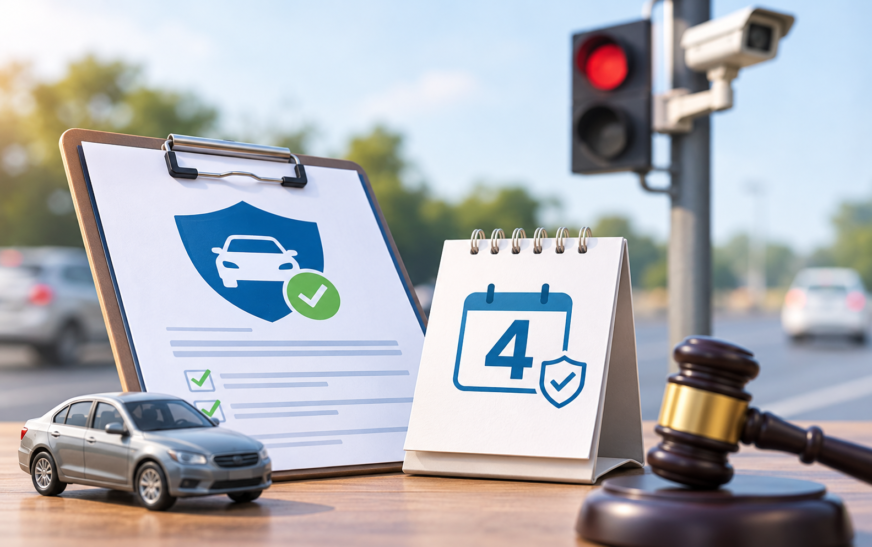
The ministry is considering a single-premium insurance arrangement with four-year terms for cars and six-year terms for two-wheelers.
Under the reported approach, customers would pay once for coverage extending across several years, reducing the frequency of renewal transactions.
Longer policy terms could also help maintain continuous insurance during the period covered by the policy. That is relevant to vehicles whose owners fail to renew insurance on time.
The precise product structure has not been disclosed. Reports do not establish the final premium amounts, cancellation conditions or how insurers would account for changes during the policy period.
The proposal follows earlier Supreme Court directions on extending compulsory third-party insurance periods for new vehicles.
However, the reported single-premium structure still requires implementation details from the government and insurance regulator.
For insurers, a longer contract period would affect premium collection, policy administration and how products are presented to buyers.
It would also require clarity on pricing across multiple years rather than individual annual transactions.
The ministry is reportedly reviewing base insurance rates for certain vehicle categories, including electric vehicles, as part of its broader examination of motor insurance.
Traffic violations could affect renewal premiums
Another proposal would link motor insurance premiums to offences recorded against vehicle owners during the preceding year.
Motorists with repeated traffic violations could face higher renewal costs if the proposed approach is adopted.
The reported objective is to make insurance pricing more responsive to driving behaviour while encouraging compliance with traffic rules.
MotorBeam reported that the ministry was examining traffic records as a potential input into premium calculations.
The reports do not specify which offences would trigger higher premiums or how much a policyholder would pay.
They also leave open how insurers would access driving records, correct disputed information and distinguish offences of different severity.
Those decisions would affect both underwriting systems and customer communication.
For example, insurers would need a consistent method for incorporating verified traffic records into renewal quotations if the proposed system proceeds.
Motorists would also need to know which recorded violations affect their premium and how the resulting amount is calculated.
A traffic challan does not automatically increase motor insurance premiums under the proposals reported this week.
Fuel-station pilot targets uninsured vehicles
A separate enforcement initiative would test whether fuel sales can be linked to a vehicle’s valid insurance status.
According to the reporting, the Supreme Court Committee on Road Safety has asked the road transport and petroleum ministries to pursue a pilot at ten petrol stations.
Five stations would be in Haryana and five in Uttar Pradesh.
The proposed pilot would use automatic number-plate recognition (ANPR) cameras to identify vehicles and check their insurance status.
Vehicles without valid cover could be refused fuel under the proposed arrangement.
The pilot’s operating rules, participating petrol stations and launch date have not been announced.
The approach would extend insurance enforcement beyond conventional roadside checks by using existing vehicle-identification technology.
It would also depend on reliable insurance records and a process for resolving incorrect or outdated status information.
The proposed pilot is separate from the National Highways Authority of India’s insurance renewal SMS initiative.
On 19 November, NHAI clarified that its toll-plaza messages were awareness alerts and did not involve challans or penalties at toll plazas.
Insurance gap keeps enforcement under scrutiny
The latest reports cite insurance data showing nearly 25 crore active vehicles with valid cover, representing approximately 81% of vehicles described as currently operating in India.
That leaves an estimated 19% without valid insurance on the same reported basis.
The figures underline the scale of the compliance challenge, although published estimates vary according to the vehicle records and populations examined.
Third-party insurance is already compulsory for motor vehicles used on public roads under Section 146 of the Motor Vehicles Act, 1988.
The Ministry of Road Transport and Highways has previously warned that operating a vehicle without the required third-party cover is a punishable offence.
The proposed reforms would therefore change how insurance is purchased, priced or checked rather than introduce the underlying requirement to hold third-party cover.
Separately, the Insurance Regulatory and Development Authority of India (IRDAI) issued a four-layer motor insurance circular on 2 November 2026.
That framework, scheduled to take effect on 15 December, separates third-party liability, occupant or pillion-rider liability, personal accident protection and own-damage cover.
Unlike the proposals reported this week, the four-layer framework already has an issued circular and an announced effective date.
For motor insurers, the reported changes would create further requirements around product design, renewal pricing and data integration if adopted.
The next development will depend on formal decisions covering policy terms, premium calculation and the proposed fuel-station pilot.
MYINSURANCE360 has previously covered IRDAI’s four-layer motor insurance rules and the pressures facing motor third-party insurers. Related developments appear under Regulation & Policy.